The Monthly Fee That Never Ends: Rethinking the True Cost of Clothing Subscriptions
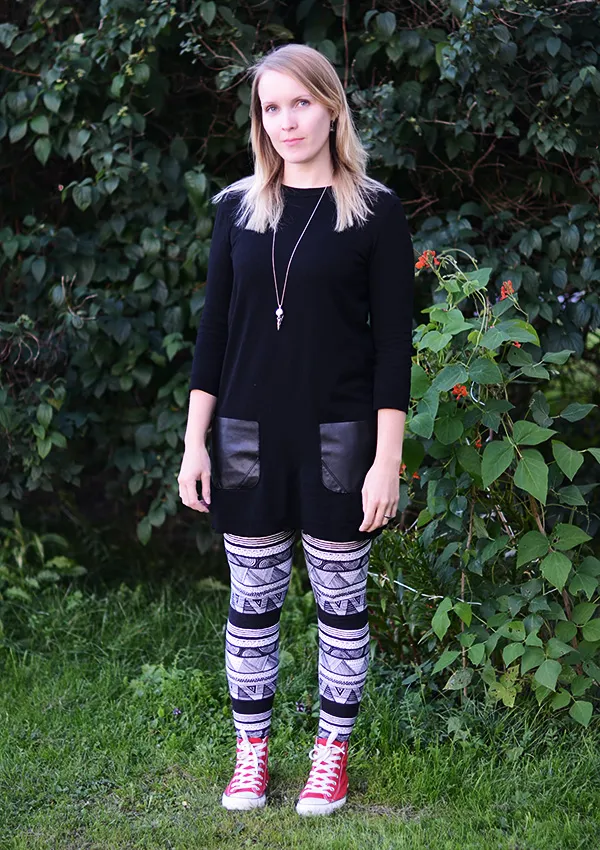
Photo: joan!ta, CC BY-SA 2.0, via Wikimedia Commons
The pitch is appealing on its surface. Pay a monthly fee, receive a rotating selection of clothing, wear what you want, return it when you are done — and never worry about a closet full of things you no longer need. Clothing rental services have spent considerable marketing energy positioning this model as both economically sensible and environmentally responsible.
It is worth examining whether either claim holds up.
What the Subscription Model Actually Costs
Let us begin with the numbers, because that is where the clearest picture emerges.
Most mid-tier clothing rental subscriptions in the United States currently price between $69 and $150 per month, depending on the number of items and the tier of service. At the lower end of that range, a consumer spending $69 monthly commits $828 per year to clothing they will never own. Over three years, that figure reaches $2,484. Over five years, it exceeds $4,100.
For context, a well-constructed pair of American-made denim jeans retails between $150 and $250. A durable merino wool sweater from a quality manufacturer runs $100 to $200. A properly built oxford-cloth button-down shirt, cut from substantial fabric with reinforced construction, can be had for $80 to $150. A consumer who spends one year's worth of subscription fees on individually selected, high-quality garments would own those pieces outright — and, with appropriate care, would continue wearing them for the better part of a decade.
The subscription model produces no such accumulation of value. When the subscription ends, the wardrobe ends with it.
The Hidden Economics of Convenience
Subscription services are careful to emphasize convenience, variety, and the freedom from commitment. These are genuine benefits for a narrow set of use cases — someone who requires formal attire infrequently, for instance, or who travels professionally and needs context-specific garments on a temporary basis.
But for the average consumer building a functional daily wardrobe, the convenience narrative masks several structural disadvantages.
First, fit is non-negotiable. Rental garments are selected from shared inventory and sized generically. There is no opportunity for alteration, no adjustment for individual proportions, and no guarantee that what arrives will fit the way clothing should fit. A garment that does not fit well does not get worn — which means the monthly fee is being paid, in part, for items that spend the rental period folded in a bag.
Second, condition is variable. Rental clothing has been worn by others. Regardless of the cleaning protocols a service employs, shared garments accumulate wear differently than personally owned ones. Pilling, subtle distortion, and fabric fatigue are the natural results of high rotation through multiple wearers. The consumer is paying for a product whose quality degrades in ways they cannot control.
Third, selection is curated by the service, not by the subscriber. The variety that rental platforms advertise is real, but it exists within the constraints of their inventory decisions, brand partnerships, and restocking priorities. A consumer who owns their wardrobe selects every item according to their own criteria. A subscriber selects from what is available.
The Sustainability Question
Rental services frequently invoke environmental responsibility as a core justification for their model. The argument is that shared clothing reduces overall production demand and keeps garments in circulation longer.
This argument is not without merit in theory. In practice, it is complicated by logistics.
Every rental cycle requires shipping — in both directions. Items must be laundered between wearers, typically using commercial processes with significant water and energy inputs. The packaging involved in a monthly subscription compounds this footprint over time. Several independent lifecycle analyses have found that the environmental benefit of clothing rental is heavily dependent on how many times a garment is actually rented before it is retired — and that benefit erodes quickly when shipping distances are long or rental frequency is low.
Owning a well-made garment and wearing it for ten years produces a substantially smaller per-wear environmental cost than any rental model, because the production impact is distributed across a much longer active life. The most sustainable piece of clothing is the one you already own — and wear repeatedly.
What Ownership Actually Provides
The case for owning quality clothing is not merely economic. It is also practical in ways that compound over time.
A garment you own can be altered to fit your body precisely. It can be repaired when it sustains minor damage. It develops a character specific to your use — a patina on leather, a softening of linen, a break in denim that conforms to your movement. These qualities cannot be rented. They accrue only through sustained personal ownership.
Ownership also imposes a productive discipline on purchasing decisions. When you are responsible for what you bring into your wardrobe, you tend to be more deliberate about it. The rental model, by design, reduces friction — which sounds appealing but often results in less considered choices and a weaker relationship between the consumer and their clothing.
When Rental Makes Sense
Fairness requires acknowledging the use cases where rental genuinely serves the consumer better than purchase.
For a one-time formal event — a wedding, a gala, a single high-stakes occasion — renting a garment you will wear once is economically rational. The same logic applies to maternity dressing, where body proportions change significantly over a defined period, or to professional transitions where wardrobe needs shift before a long-term direction is clear.
These are specific, time-bounded circumstances. They are not the basis for a permanent clothing strategy.
The Longer Calculation
The clothing subscription industry is built on the assumption that consumers will not do the arithmetic. The monthly fee is designed to feel manageable — smaller, in isolation, than the price of a quality garment. But fees do not exist in isolation. They accumulate, month after month, against a wardrobe that remains entirely outside your ownership.
The alternative is not necessarily to spend more. It is to spend differently — selecting fewer items, choosing them with greater care, and building a wardrobe that belongs to you in every sense of the word. Over any meaningful time horizon, that approach costs less, wastes less, and produces something the subscription model never can: a wardrobe with actual, lasting value.