Earning Your Way Up: A Thoughtful Strategy for Upgrading Your Wardrobe as Your Income Grows
There is a particular kind of restlessness that arrives with a raise, a promotion, or a period of genuine financial stability. It is the feeling that your surroundings—your apartment, your car, your clothing—should somehow reflect your progress. In the realm of fashion, this restlessness is frequently exploited. Retailers are well-practiced at persuading newly solvent consumers to discard everything they own and begin again, as though a wardrobe reset were a rite of passage.
The truth is considerably less dramatic, and considerably more useful. A wardrobe that grows with your income does not require a clean slate. It requires a clear eye.
The Psychology Behind the Impulse to Start Over
Before addressing what to buy, it is worth understanding why the instinct to purge everything can feel so compelling. Psychologists who study consumer behavior have long noted that material upgrades often serve as tangible markers of personal milestones. When income rises, people seek external confirmation of internal change. Clothing is an immediate, visible medium for that expression.
The problem is that wholesale replacement conflates novelty with quality. A closet full of new, moderately priced items is not an upgrade—it is a lateral move dressed up as progress. True elevation means acquiring fewer things of meaningfully greater value, while retaining the pieces that have already demonstrated their worth through regular, satisfying wear.
Before spending a single dollar, ask yourself which items in your current wardrobe you reach for consistently. Those pieces are not liabilities to be replaced; they are the foundation upon which a better wardrobe is built.
Start With the Basics That Show the Most Wear
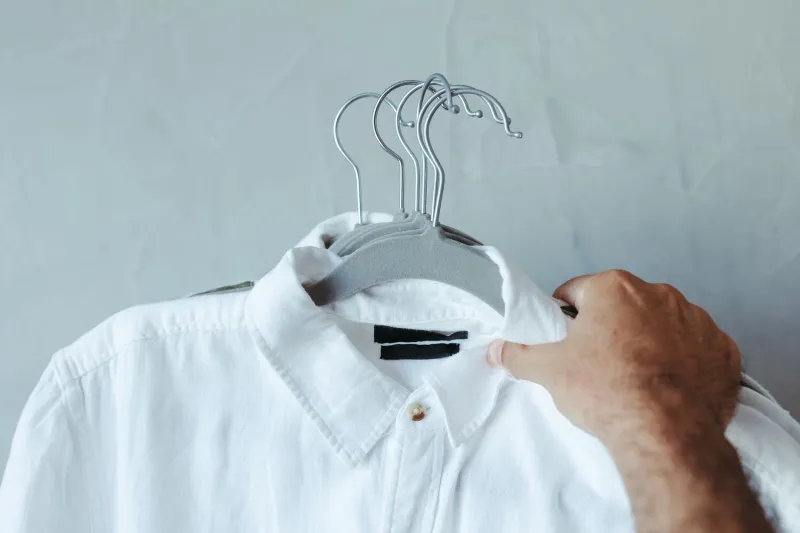
The most practical entry point for any wardrobe upgrade is the category of basics—the everyday workhorses that endure the most frequent laundering, friction, and exposure. A white dress shirt worn twice a week will reveal the limits of its construction within a year. A well-built alternative, cut from a higher thread-count cotton with reinforced seams and properly fused interfacing, will outlast two or three of its budget counterparts.
When your budget allows, replace worn basics with premium versions rather than identical replacements. This is not about brand names or conspicuous labels. It is about fabric weight, construction detail, and fit. A heavier-gauge merino wool crewneck, for instance, retains its shape through dozens of wash cycles. A pair of chinos cut from a denser twill resists pilling and holds a cleaner line across the thigh and knee.
The discipline here is restraint. Replace one category at a time. Buy the best version of a single essential item, wear it through a full season, and evaluate its performance before moving on to the next upgrade. This approach prevents the financial overextension that often accompanies income-driven wardrobe enthusiasm.
Invest in Pieces That Anchor an Entire Look
Beyond the basics, there exists a category of garments whose quality has an outsized effect on the overall impression of an outfit. These are the anchoring pieces—a well-constructed blazer, a leather belt of genuine full-grain hide, a pair of shoes built on a Goodyear-welted sole. Their quality elevates everything worn alongside them, while their absence diminishes even otherwise respectable combinations.
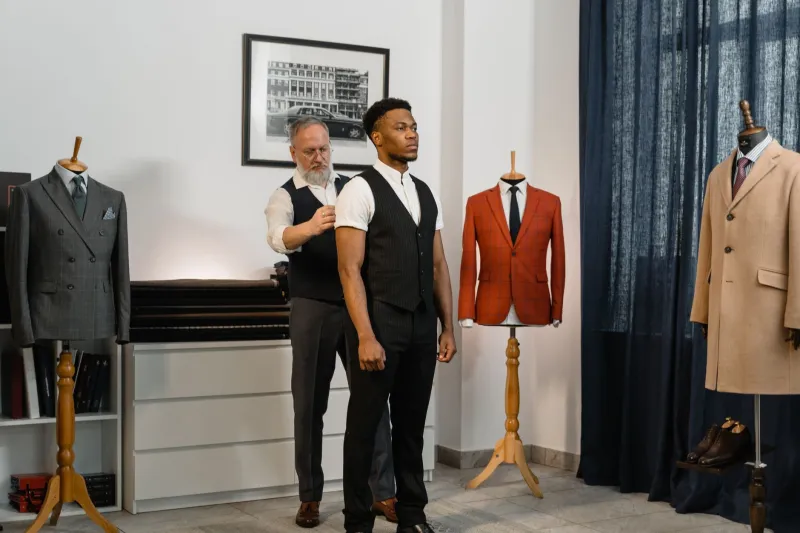
As your income grows, these are the investments worth prioritizing above novelty. A single blazer of exceptional construction, cut in a neutral tone and tailored to your specific measurements, will serve you across professional settings, social occasions, and transitional seasons for a decade or more. The per-wear cost of such a garment, calculated honestly over its lifespan, is often lower than that of three mediocre alternatives purchased over the same period.
The same logic applies to footwear. Quality leather shoes, resoled when necessary and maintained with appropriate conditioners, represent one of the clearest illustrations of the principle that durable goods are ultimately the more economical choice.
Knowing When to Retire Versus Refresh
Not every piece deserves to be upgraded. Some items in your current wardrobe may have served their purpose and reached a natural end. Learning to distinguish between a garment that warrants replacement and one that merits continued wear—or even investment in repair—is a skill that sharpens with practice.
A useful framework: evaluate each item against three criteria. Does it still fit properly? Does the fabric retain its integrity—its color, texture, and structural shape? Does it continue to serve a genuine function in your regular rotation?
If the answer to all three is yes, the item has no business being replaced simply because your income has increased. Retire a garment when it fails one or more of these tests, not when you feel the vague desire for something new.
Conversely, a piece that fits well and is made from quality cloth but has suffered minor damage—a frayed cuff, a loosened button, a small tear at the seam—may be a candidate for professional repair rather than disposal. A skilled tailor can restore such a garment to full serviceability at a fraction of the replacement cost, and doing so is consistent with the ethos of a wardrobe built to last.
Resist the Temptation to Chase Trends on an Elevated Budget
One of the more insidious risks of increased purchasing power is the temptation to apply it toward trend-driven pieces at a higher price point. A designer version of a passing silhouette is still a passing silhouette. The investment-grade garment is one that will remain relevant and wearable across multiple years and changing cultural contexts.
This does not mean your wardrobe must be conservative to the point of austerity. It means that when you do introduce a piece with a stronger aesthetic statement—a distinctive color, a more pronounced cut, an unconventional texture—you do so because it genuinely reflects your personal sensibility, not because it happens to be visible in store windows this season.
Timeless does not mean uniform. It means considered.
Building a Wardrobe That Reflects Where You Are Going
There is a version of wardrobe upgrading that is merely performative—a signal to others that one's circumstances have changed. And there is a version that is genuinely functional: a deliberate process of acquiring better tools for the life you are actually living and the one you intend to build.
The latter approach requires patience. It asks you to resist the immediate gratification of a complete overhaul in favor of a slower, more intentional accumulation of quality. But the wardrobe that results from this discipline is more coherent, more durable, and more authentically yours than anything assembled in a single weekend of retail enthusiasm.
Your income may grow in stages. Let your wardrobe grow the same way—steadily, purposefully, and with full regard for what has already proven its worth.