What Gets Worn Stays: Using Frequency Data to Build a Wardrobe That Earns Its Keep
The Gap Between What You Own and What You Actually Wear
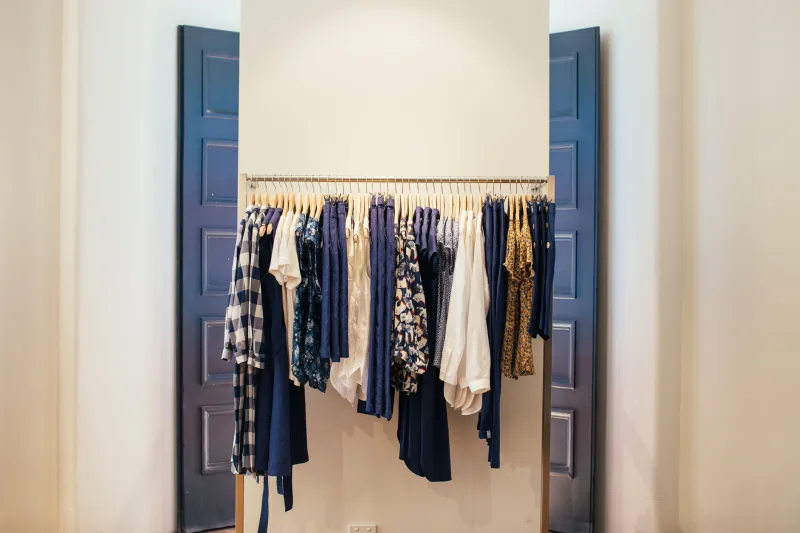
Open the average American closet and you will find a curious imbalance. A handful of garments appear week after week, pressed into regular service, while a significant portion hangs undisturbed for months at a time. According to research from the fashion industry, the average consumer wears roughly 20 percent of their wardrobe 80 percent of the time. That ratio is striking — and expensive.
The clothes that go unworn were not free. They cost money, storage space, and the mental energy that comes with owning things you feel vaguely obligated to use. More importantly, they represent a pattern of purchasing that, left unexamined, tends to repeat itself. The solution is not simply to buy less or to follow a prescriptive formula about wardrobe size. The solution is information — specifically, the kind of information that comes from tracking how frequently each piece in your wardrobe actually gets worn.
Why Intuition Alone Is Not Enough
Most people believe they have a reasonable sense of what they wear. In practice, memory is a poor accountant. We tend to remember the garments we bought with excitement, the pieces we feel we should wear, and the items we wore recently. What we underestimate are the quiet workhorses — the well-constructed trousers or the understated merino pullover — that show up consistently without fanfare. And what we overestimate is how often we actually reach for that statement blazer or the impulse purchase that seemed essential at the time.
Tracking wear frequency replaces this unreliable memory with documented evidence. Over a period of weeks or months, a clear and often surprising picture emerges: which items truly earn their place, and which ones are occupying valuable real estate without delivering value in return.
Setting Up a Simple Tracking System
The mechanics of wear tracking do not need to be complicated. The goal is consistency, not complexity. Several approaches work well depending on how much structure you prefer.
The tally method is the most straightforward. Attach a small notecard or use a simple spreadsheet to log each garment's name, purchase price, and a running tally of the number of times it has been worn. Each time you put on a piece, you add one mark. At the end of a defined period — ninety days is a useful starting point — you review the results.
Smartphone apps designed for wardrobe management, such as Stylebook or similar tools available in the US market, allow you to photograph your pieces, log outfits, and generate wear statistics automatically. For those who prefer a digital workflow, these tools can reduce the friction of daily logging considerably.
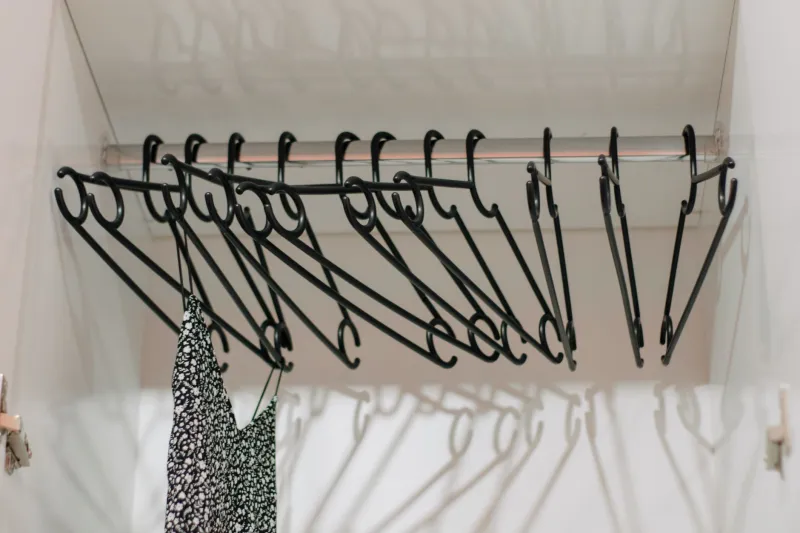
The hanger inversion method is a passive alternative that requires no active logging. At the start of your tracking period, hang every garment with the hanger facing backward. When you wear something and return it to the closet, hang it the correct way. After ninety days, every reversed hanger represents a garment you have not worn once.
Any of these methods, applied consistently, will yield the data you need.
Calculating Cost-Per-Wear
Once you have a wear count for each piece, a single calculation changes how you think about clothing value: cost-per-wear.
The formula is simple: divide the original purchase price by the number of times the garment has been worn. A $180 pair of wool trousers worn forty-five times in a year has a cost-per-wear of $4.00. A $45 fast-fashion blouse worn twice before it pilled beyond use has a cost-per-wear of $22.50. The more expensive item, measured by actual use, is the more economical one.
This metric is not merely a mathematical curiosity. It is a practical tool for evaluating whether past purchases have delivered on their implied promise and for making more deliberate decisions going forward. When you are considering a new purchase, projecting a realistic wear count — based on your actual lifestyle, not an idealized version of it — gives you a far more honest sense of whether the item justifies its price.
What the Data Tends to Reveal
For most people, wear-frequency tracking surfaces a few consistent findings.
First, the garments worn most frequently are rarely the most visually dramatic. They tend to be well-constructed basics in neutral or versatile colors: a reliable Oxford shirt, a pair of dark denim that fits correctly, a structured jacket that transitions between contexts. These pieces succeed because they are genuinely useful, not because they were purchased impulsively or because they were on trend at the time.
Second, the unworn items often share identifiable characteristics. They may require special care that proves inconvenient in practice. They may fit imperfectly — not badly enough to discard, but not well enough to reach for with confidence. They may belong to a category of occasion that arises less frequently than anticipated. Recognizing these patterns is valuable, because it allows you to apply that knowledge before the next purchase rather than after.
Third, the data frequently uncovers hidden gems: pieces that have been performing quietly for years without receiving much conscious appreciation. Identifying these items allows you to recognize what is genuinely working in your wardrobe — and to seek out similar qualities when you next shop.
Translating Findings Into Future Decisions
The purpose of a wardrobe audit is not self-criticism. It is clarity. Once you understand which characteristics predict high wear frequency in your own life — certain fabrics, fits, color ranges, or construction standards — you have a meaningful framework for evaluating new purchases.
Before buying any new garment, consider asking yourself three questions: How many times per month, realistically, will I wear this? Does it work with at least three items I already own and wear regularly? Is the construction quality sufficient to sustain the number of wears I expect from it?
These questions are not restrictive. They are protective — of your budget, your time, and the coherence of a wardrobe that is meant to serve you reliably rather than accumulate passively.
The Long View on Clothing Value
At Steadfast Apparel, the principle underlying everything we advocate is straightforward: clothing should be built to last and worn with purpose. Wear-frequency tracking is one of the most direct expressions of that principle available to any consumer, regardless of budget or style preference.
A garment that is worn regularly, cared for properly, and selected with genuine intentionality represents a fundamentally different relationship with clothing than one purchased on impulse and worn twice. The former is an investment. The latter is a cost that compounds quietly over time.
The numbers in your own closet will tell you which category most of your wardrobe currently falls into. More importantly, they will give you the foundation to do better — not through deprivation, but through the kind of informed, deliberate decision-making that produces a wardrobe you can rely on for years to come.