Dressed for Every Chapter: How to Build a Wardrobe That Moves with Your Life

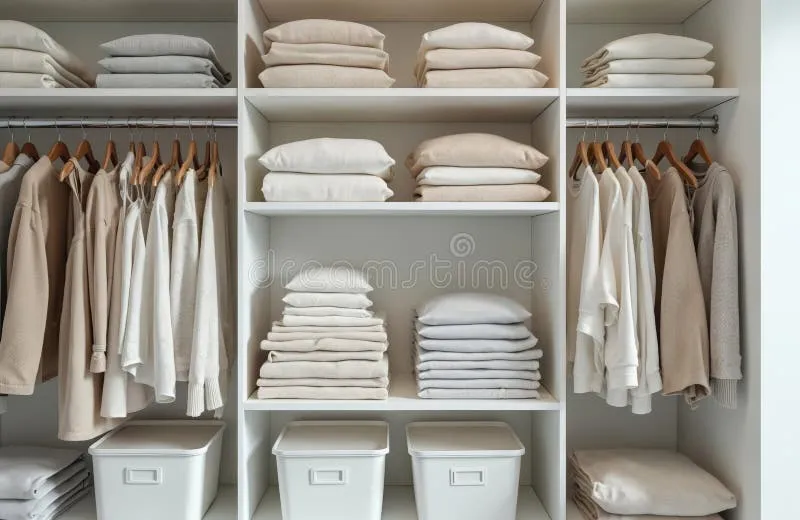
Photo: woman organizing classic neutral wardrobe in walk-in closet, via www.bostoncloset.com
There is a particular kind of financial and emotional exhaustion that follows a major life change—the realization that your closet, assembled carefully for one version of your life, no longer speaks to who you are becoming. A new city. A different career. A body that has changed. A lifestyle that has quietly pivoted away from what it once was. The instinct, reinforced by fast fashion's perpetual churn, is to start over entirely.
That instinct is worth resisting.
The most resilient wardrobes are not built for a single chapter. They are built with transitions in mind—anchored by pieces that hold their form, their function, and their relevance across the shifting terrain of a life well-lived. Understanding how to construct that kind of wardrobe is less about following trends and more about developing a disciplined philosophy toward what you bring into your collection.
The Foundation Principle: Versatility Is Not Compromise
There is a persistent misconception that choosing versatile clothing means settling for the generic or the uninspired. In practice, the opposite is often true. The most adaptable pieces tend to be the most carefully considered—garments whose construction, fabric, and proportion were designed with longevity in mind rather than a single season's aesthetic.
A well-tailored wool trouser, for instance, can accompany you from a corporate boardroom in Chicago to a creative studio in Austin without requiring alteration in spirit or silhouette. A heavyweight cotton Oxford shirt reads as polished in a client meeting and relaxed on a weekend without sacrificing either register. These are not compromises. They are investments in clothing that refuses to become irrelevant.
When evaluating any piece through this lens, ask a simple question: Does this item depend on a specific context to make sense, or does it carry meaning across multiple settings? The answer will tell you a great deal about its long-term value.
Career Transitions: Dressing Across Professional Identities
Americans change careers more frequently than previous generations, and the professional dress codes that once provided clear guidance have become considerably more fluid. Someone moving from finance to a tech startup, or from a classroom to a consultancy, faces a wardrobe challenge that is genuinely complex.
The solution is not to build two separate wardrobes but to identify the pieces that translate across professional cultures. Structured blazers in neutral tones—navy, charcoal, camel—function as equalizers. They lend authority to casual settings and approachability to formal ones. Well-fitted chinos in dark rinses occupy a similar middle ground, neither fully casual nor rigidly formal.
Prioritize fabric quality above all else during these transitions. A blazer constructed from quality wool or a wool-blend will hold its shape through years of varied use in a way that a synthetic alternative simply will not. That durability is not incidental—it is the mechanism by which one garment serves multiple professional identities without looking threadbare or out of place.
Body Changes: Clothing That Accommodates, Not Punishes
Bodies change. This is not a failure or an inconvenience to be managed with shame—it is a straightforward fact of human life. Pregnancy, aging, health journeys, athletic development, and the natural fluctuations of adulthood all affect how clothing fits, and a rigid wardrobe built around a single precise measurement is a wardrobe perpetually at risk of obsolescence.
Building with this reality in mind means selecting pieces with some degree of structural generosity. Garments with genuine ease in the cut—not shapelessness, but considered room—accommodate change without requiring replacement. It also means investing in tailoring as a tool rather than a luxury. A quality piece altered to fit your current body is almost always more economical and more satisfying than purchasing something new.
Fabrics with natural stretch, such as wool crepe or ponte, offer additional adaptability without the degradation associated with synthetic elastics, which tend to lose integrity over time. These are practical considerations that compound in value across years of wear.
Geographic and Climate Transitions: Rethinking the Seasonal Wardrobe
Moving from Minneapolis to Atlanta, or from coastal California to the Pacific Northwest, demands a genuine reassessment of what your wardrobe needs to accomplish. Yet even dramatic climate transitions need not require a complete overhaul if your existing collection is built on quality natural fibers.
Wool is the most compelling example. A fine merino wool layer regulates temperature with remarkable efficiency across a wide range of conditions—providing warmth in cold climates and breathability in mild ones. Linen and cotton chambray, meanwhile, perform across warm-weather geographies with a versatility that synthetic alternatives cannot match.
The strategy here is layering. A wardrobe built around strong individual pieces that interact well with one another can be reconfigured for dramatically different climates without requiring entirely new components. The investment is in the system, not in climate-specific items that become useless the moment your geography changes.
Lifestyle Pivots: When Who You Are Shifts
Perhaps the most nuanced transition is the lifestyle pivot—the moment when your daily life begins to look fundamentally different from what it once did. Retirement. New parenthood. A return to an active outdoor life after years of desk work. These shifts carry deep emotional weight, and the temptation to express the new chapter through an entirely new wardrobe is understandable.
A more considered approach is to assess honestly what your existing wardrobe still serves and what it no longer does. Rarely is the answer "nothing." More often, a meaningful portion of what you already own retains relevance, while a specific category of clothing—the formal wear of a retired executive, the city-oriented pieces of someone who has relocated to a rural setting—has genuinely run its course.
Identifying that distinction saves money, reduces waste, and preserves the continuity of a personal style that has been developed over time. It also clarifies exactly what new investment is genuinely necessary, rather than what is merely reactive.
The Emotional Intelligence of a Durable Wardrobe
There is something worth naming directly: the wardrobe that grows with you is not just a financial strategy. It is an act of self-respect and continuity. Clothing that has accompanied you through multiple chapters of life carries a kind of meaning that newly purchased items cannot replicate. The jacket worn to a pivotal meeting. The dress that has appeared in photographs spanning a decade. These pieces become artifacts of a life, not merely garments.
Building with durability and adaptability in mind is, at its core, a commitment to the long view—to the understanding that who you are is not defined by a single moment or a single wardrobe, but by the accumulation of choices made with intention and care.
That is the wardrobe worth building. Not for who you are today alone, but for every version of yourself yet to come.