Turn It Inside Out: What the Interior of a Garment Reveals About Its True Worth
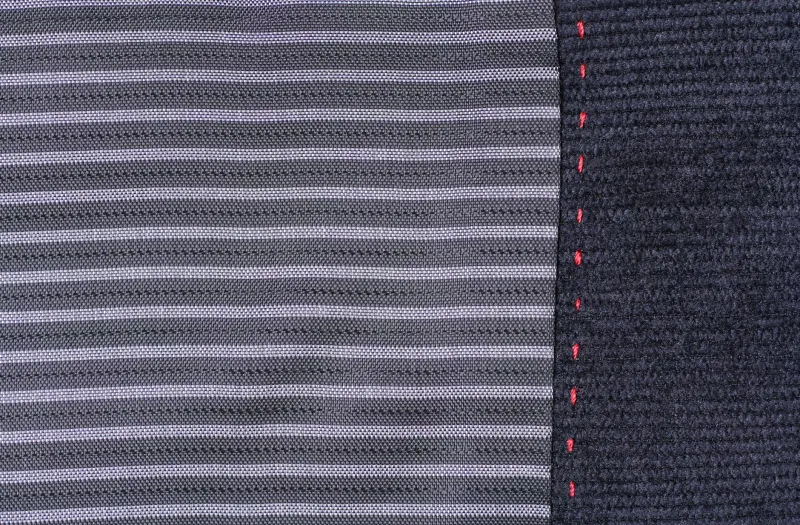
When most people evaluate a garment before purchasing it, they do what comes naturally: they look at it. They assess the color, the drape, the surface texture. They may check the label for fiber content. They hold it up to the light or run a hand across the outer fabric.
What they rarely do is turn it inside out.
This is a significant omission. The exterior of a garment is, in a meaningful sense, its marketing. It is the face the manufacturer presents to the consumer, the surface on which design decisions are concentrated and quality signals are most deliberately managed. The interior is something else entirely. It is where construction choices are made without an audience—where a manufacturer either commits to durability or cuts the costs they believe no one will notice.
Learning to read interior construction is one of the most practical skills available to a consumer who intends to buy well and buy once.
Seam Finishing: The Single Most Revealing Detail
Begin with the seams. Turn the garment inside out and examine how the raw edges of the fabric have been treated. This single detail communicates more about a manufacturer's commitment to longevity than almost any other construction element.
The most common finishing method in mass-market clothing is the serged or overlocked edge—a looped stitch that wraps around the raw edge to prevent fraying. Serging is not inherently a sign of poor quality; it is standard practice in contemporary garment construction and is entirely adequate in many contexts. What matters is the execution. A clean, tight serge that lies flat against the seam is acceptable. A loose, irregular serge that has already begun to pull away from the fabric edge before the garment has been worn is not.
Higher-quality finishing methods include the flat-felled seam, in which the seam allowance is folded over and stitched down on both sides, enclosing all raw edges. This method is common in quality denim and dress shirts, and it produces a seam that is both stronger and cleaner than a serged alternative. French seams, which enclose the raw edge within a second seam, serve a similar function in lighter fabrics and are a reliable indicator of careful construction in blouses, lightweight trousers, and unlined jackets.
In structured garments—blazers, sport coats, tailored trousers—look for seam allowances that are generously wide. A narrow seam allowance, typically less than half an inch, limits the garment's capacity for future alteration. A well-made jacket with generous seam allowances can be let out as needed; one constructed with minimal allowances cannot. This is not a cosmetic detail. It is a direct indicator of whether the manufacturer anticipated that the garment would be worn long enough to require adjustment.
Lining: Function Versus Decoration
Lining serves multiple purposes in a well-made garment: it reduces friction against the body, protects the outer fabric from internal wear, provides structure, and facilitates ease of dressing. A garment that is fully lined is not automatically superior to one that is partially or unlined—the appropriateness of lining depends on the garment's purpose and the outer fabric's weight. What matters is whether the lining present is doing its job competently.
Examine the lining fabric itself. In quality garments, lining is typically a smooth, tightly woven material—often a fine polyester, acetate, or, in exceptional cases, silk or a silk blend. It should feel smooth and substantial, not thin or papery. A lining that snags easily, feels rough against the skin, or has already begun to separate at the seam points before purchase is a clear indicator of compromised construction.
Pay attention to how the lining is attached. In a quality jacket or coat, the lining is sewn in with a small amount of ease—a slight looseness that allows the outer fabric and lining to move independently without pulling or bunching. A lining that is attached too tightly will stress both itself and the outer fabric with every movement, accelerating wear at stress points. Look at the hem of the lining as well. A floating hem, in which the lining hem is tacked rather than sewn directly to the outer hem, is a sign of thoughtful construction that accommodates movement and reduces strain.
Interfacing: The Hidden Architecture
Interfacing is the material applied to the interior of structured areas—collar stands, cuffs, jacket fronts, waistbands—to provide shape and stability. It is invisible from the outside and rarely discussed in mainstream fashion coverage, which makes it one of the most reliably diagnostic details available to an informed buyer.
There are two primary methods of applying interfacing: fusing and sewing. Fused interfacing is bonded to the fabric using heat and adhesive. It is faster and less expensive to apply, and it dominates mass-market production. Sewn, or canvas, interfacing is stitched to the fabric by hand or machine, allowing it to move with the cloth rather than constraining it.
The practical difference becomes apparent over time. Fused interfacing is prone to delamination—the separation of the interfacing from the outer fabric through repeated washing and wear. You have likely seen this in a collar that has developed a bubbled or rippled appearance, or a jacket front that looks slightly puckered after laundering. This is fusing failure. It is not repairable in any practical sense.
Canvas interfacing, by contrast, conforms to the body over time and does not delaminate. Garments built on a canvas foundation—particularly suit jackets and sport coats—are genuinely durable in a way that fused garments cannot replicate. To test for canvas construction in a jacket, pinch the front panel between your fingers and gently roll the fabric. A canvased jacket will have a slight give, a layered quality that feels like three distinct elements moving together. A fully fused jacket will feel rigid and single-layer.
Hardware and Closures: Small Details With Large Consequences
Buttons, zippers, snaps, and hooks are the mechanical components of a garment, and they are subject to the same quality gradient as every other construction element. Examine buttons for weight and finish. Plastic buttons on quality garments are not inherently problematic, but they should feel dense and well-finished, not hollow or sharp-edged. Horn, corozo, and metal buttons are generally more durable and are a positive signal in their own right.
Zippers warrant particular attention. A quality zipper—from manufacturers such as YKK, whose products are standard on well-made American and international garments—will run smoothly, feel substantial, and show no tendency to catch or skip on the fabric. A zipper that requires coaxing before the garment has been worn once will only become more problematic with use.
Check the bar tacks—those dense, reinforcing stitches placed at stress points such as pocket openings and belt loops. They should be tight, flat, and firmly anchored. Their presence in the right locations indicates that the manufacturer understood where a garment fails under real-world use and took steps to prevent it.
A Practical Habit Worth Developing
The discipline of examining interior construction does not require expertise. It requires only the willingness to look where most shoppers do not. In a physical store, turn the garment inside out before you commit. Examine the seams, the lining, the interfacing, and the closures. In an online context, look for photographs of interior construction—and treat their absence as information. Brands confident in their construction typically show it.
Over time, this habit develops into a reliable instinct. You begin to feel the difference between a garment built to endure and one built to appear sufficient at the point of sale. That distinction is, ultimately, what separates a wardrobe investment from a wardrobe expense.