Mend It, Keep It: The Case for Reclaiming Your Clothes Through Repair

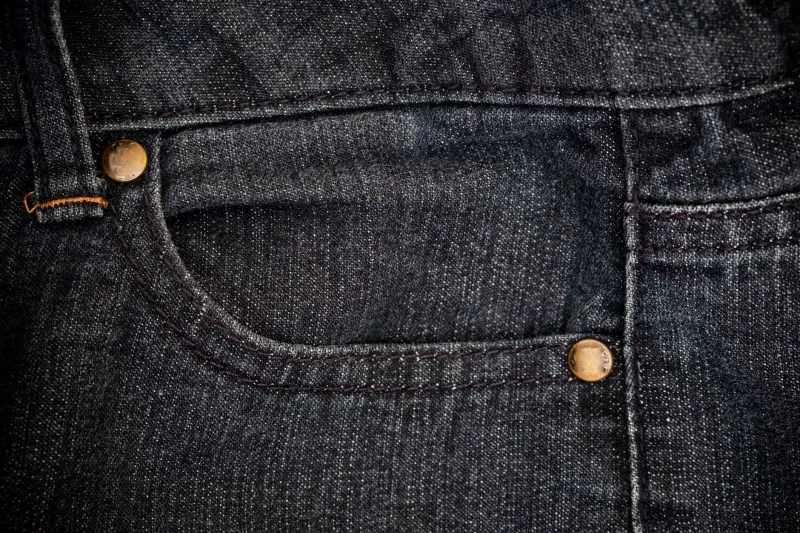
Photo by Photo by Joseph Sharp on Unsplash on Unsplash
There is a jacket hanging in the back of many American closets. It fits well, holds memories, and was made with real care. A seam has split at the shoulder. A button is missing from the cuff. And so it waits—neither worn nor discarded—while its owner assumes the damage is permanent.
It is not permanent. It never was.
The assumption that a damaged garment is a finished garment is one of the quietest victories of throwaway fashion culture. When consumers believe repair is beyond them, they buy again. When they buy again, they buy cheaply. And when they buy cheaply, the cycle accelerates. Learning to mend your own clothing interrupts that cycle at its most personal point: the moment you decide whether something is worth keeping.
The Psychology of Repair
There is a concept in Japanese aesthetics known as kintsugi—the practice of repairing broken pottery with gold, treating the damage as part of the object's history rather than a reason to discard it. While the metaphor is not perfectly transferable to denim and wool, the underlying philosophy resonates deeply with anyone who has ever sewn a patch onto a beloved pair of work pants and felt, unexpectedly, proud.
Research in behavioral psychology suggests that the effort we invest in an object increases our attachment to it—a phenomenon sometimes called the IKEA effect. When you repair a garment, you are not merely extending its functional life. You are deepening your relationship with it. The coat you re-stitched during a winter evening becomes something more than a coat. It becomes evidence of your own capability.
Sustainable fashion advocates have long understood this dynamic. "Repair is the most radical act available to the average consumer," says one textile educator based in Portland, Oregon, who teaches community mending workshops. "It says: I refuse to treat this as garbage. I refuse to participate in the system that wants me to." That refusal, repeated across thousands of individual wardrobes, accumulates into something meaningful.
What You Actually Need to Get Started
The barrier to garment repair is lower than most people imagine. A basic sewing kit—needles, thread in a few core colors, small scissors, a seam ripper, and a handful of spare buttons—costs less than fifteen dollars and fits in a tin the size of a paperback novel. That modest investment unlocks the ability to address the majority of common garment failures.
For those inclined toward a slightly more capable setup, a hand-stitching awl and iron-on interfacing expand the range of repairs considerably. A basic sewing machine, while not essential, makes quick work of longer seams and opens the door to more substantial alterations.
Common Repairs and How to Approach Them
Re-stitching a Split Seam
This is the most frequently encountered repair and the easiest to execute. Turn the garment inside out to expose the seam allowance. Using a thread that matches the fabric as closely as possible, sew a running stitch along the original seam line, overlapping by at least half an inch on either side of the split to anchor the repair securely. For high-stress areas—the crotch seam of trousers, the underarm of a shirt—reinforce the new stitching with a second parallel pass.
Replacing a Button
Thread a needle with a doubled length of thread and knot the end. Position the replacement button over the original attachment point, aligning it with the buttonhole. Pass the needle up through one hole in the button and down through the opposite hole, through the fabric, repeating six to eight times. For four-hole buttons, work in an X pattern. Finish by wrapping the thread several times around the shank of stitching beneath the button before knotting off. A button sewn this way will outlast the original.
Patching a Worn Area or Small Hole
For visible repairs on casual garments, a contrasting patch applied by hand or machine can be both functional and intentional. For repairs you prefer to keep discreet, an iron-on interfacing patch applied to the interior of the fabric stabilizes the damaged area without altering the exterior appearance. On denim specifically, a technique called sashiko—a Japanese running stitch applied in a grid pattern—reinforces worn fabric while producing a result that is genuinely attractive.
Addressing Pilling
Pilling is not damage in the structural sense, but it ages a garment visually. A fabric shaver, available at most drugstores for under ten dollars, removes pills in minutes and restores a garment's surface to something close to its original appearance. This is particularly effective on wool, cashmere, and cotton-synthetic blends.
Repair as a Long-Term Practice
The goal of a repair practice is not to achieve perfection on the first attempt. Early mending efforts may be imperfect. Stitches may be uneven. Patches may not lie completely flat. This is expected, and it matters less than the habit itself.
Over time, the skills compound. The consumer who learns to replace a button in January is replacing zippers by autumn. The person who patches a pair of jeans once begins to see the longevity potential in every garment they own. The wardrobe shifts from a rotating inventory of disposable items to a collection of things worth maintaining.
At Steadfast Apparel, we believe that durability is not only a property of fabric and construction—it is also a property of the relationship between a garment and the person who wears it. The most durable wardrobe is one its owner is committed to preserving. Repair is how that commitment is expressed, one stitch at a time.
The jacket in the back of the closet is waiting. It does not require a tailor. It requires ten minutes, a needle, and the decision that it is worth the effort.
It is.